

Research,
one of the founding purposes
of the Grup TLP Barcelona

Borderline Personality Disorder (BPD) is not a new condition, but there are still significant gaps in knowledge regarding its possible causes, its identification and diagnosis, and the effectiveness of different treatment options. For this reason, our group has developed strategic research lines on BPD across the lifespan since its inception.

National and international competitive projects, both single-center and collaborative, as well as independent research initiatives, have been carried out. Their results have been presented at scientific meetings and published in specialized journals.
With the primary objective of clarifying the diagnosis of the disorder, the different research activities can essentially be summarized in the following lines of investigation:

Development and validation, within our context, of instruments for the detection and assessment of BPD.

Study of the potential risk factors that may contribute to the development of the disorder.

Therapeutic approaches for the management of BPD across the lifespan.

PROJECTS

Grup-TLP Barcelona
Study of the effectiveness of Transference-Focused Psychotherapy group therapy (TFP-G) in a sample of patients diagnosed with Borderline Personality Disorder.
Vall d’Hebron Institut de Recerca (VHIR). PR(AG)23/2024

Sóc un bloc de text. Feu clic al botó Edita per canviar aquest text. Lorem Ipsum és un text de farciment usat per la indústria de la tipografia i la impremta.

Grup-TLP Barcelona
Study of the effectiveness of Transference-Focused Psychotherapy (TFP) versus Treatment As Usual (TAU) in a sample of patients diagnosed with Borderline Personality Disorder.
Vall d’Hebron Institut de Recerca (VHIR). PR(AG)503/2020

Sóc un bloc de text. Feu clic al botó Edita per canviar aquest text. Lorem Ipsum és un text de farciment usat per la indústria de la tipografia i la impremta.

Grup-TLP Barcelona
Follow-up study of Borderline Personality Disorder: Clinical and neuroimaging reassessment six years after diagnosis in adolescence.
Fondo de Investigación Sanitaria. Instituto de Salud Carlos III. PI22/01131

Sóc un bloc de text. Feu clic al botó Edita per canviar aquest text. Lorem Ipsum és un text de farciment usat per la indústria de la tipografia i la impremta.

Grup-TLP Barcelona
Early Psychotherapeutic Intervention for Non-Suicidal Self-Injurious Behaviors in Adolescents and Young Adults (Transitional Age Youth; TAY): The Tay_SH Program.
Vall d’Hebron Institut de Recerca (VHIR). PR(AG)540/2019

Sóc un bloc de text. Feu clic al botó Edita per canviar aquest text. Lorem Ipsum és un text de farciment usat per la indústria de la tipografia i la impremta.

PUBLICATIONS

Grup-TLP Barcelona
The effectiveness of the TaySH (Transitional Age Youth Self-Harm) Program in the management of Non-Suicidal Self-Harm (NSSI) in outpatient adolescents and young adults: A non-randomized controlled pilot study.
The European Journal of Psychiatry. Volume 39, Issue 2, 2025, 100288

Natalia Calvo, Silvia Amoretti, Jorge Lugo-Marín, Montserrat Oriol, Citlallí Perez, Josep Antoni Ramos-Quiroga, Marc Ferrer

Non-suicidal self-injurious behaviors (NSSI) have become one of the most serious mental health problems among adolescents and young adults worldwide, especially within clinical populations. The main objective of this non-randomized pilot study is to demonstrate the effectiveness of the TaySH Program in a clinical sample of 37 outpatient patients aged between 14 and 25 years (M = 16.70, SD = 1.51), within the developmental stage known as TAY (Transitional Age Youth).

Grup-TLP Barcelona
Childhood maltreatment and non-suicidal self-injury in adolescent population: A systematic review and meta-analysis
Child Abuse Negl. 2024 Nov;157:107048.

Natalia Calvo, Jorge Lugo-Marín, Monterrat Oriol, Citlalli Pérez-Galbarro, Damià Restoy, Josep Antoni Ramos-Quiroga, Marc Ferrer

Non-suicidal self-injury (NSSI) is highly prevalent among adolescents. However, knowledge about the potential factors that may precede and influence its development remains limited. Our objective is to examine the impact of adverse childhood events and, more specifically, the different types of child maltreatment (CM) in adolescents with NSSI. This involves conducting a systematic review and a meta-analysis of the different subtypes of CM (physical and emotional neglect, physical and emotional abuse, sexual abuse) in both clinical and non-clinical samples of adolescents with NSSI.

Grup-TLP Barcelona
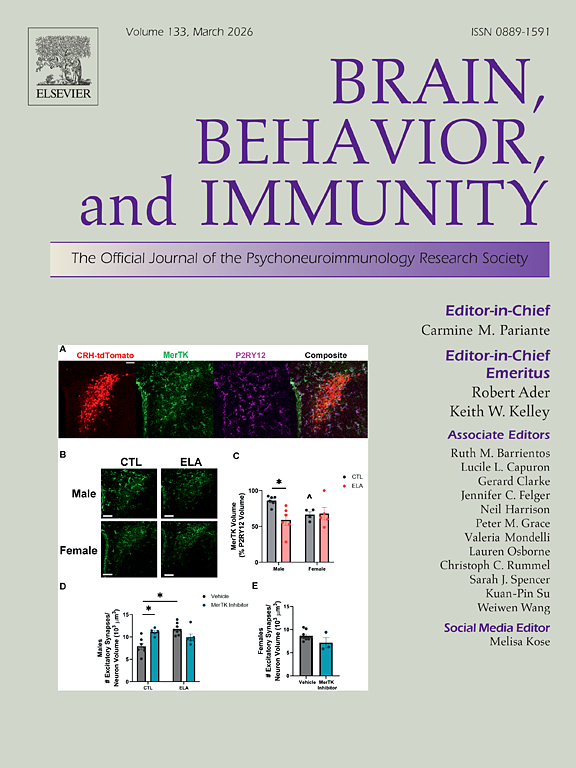
Efficacy of a synbiotic in the management of adults with Attention-Deficit and Hyperactivity Disorder and/or Borderline Personality Disorder and high levels of irritability: Results from a multicenter, randomized, placebo-controlled, "basket" trial
Brain Behav Immun. 2024 Aug;120:360-371.

Gara Arteaga-Henríquez, Carolina Ramos-Sayalero, Pol Ibañez-Jimenez, Silvia Karina Rosales-Ortiz, Tünde Kilencz, Carmen Schiweck, Isabel Schnorr, Anne Siegl, Alejandro Arias-Vasquez, István Bitter, Christian Fadeuilhe, Marc Ferrer, Catharina Lavebratt, Silke Matura, Andreas Reif, János M Réthelyi, Vanesa Richarte, Nanda Rommelse, Josep Antoni Ramos-Quiroga

Irritability worsens the prognosis of ADHD and BPD, yet therapeutic options remain limited. This randomized, double-blind trial evaluated the efficacy of a synbiotic compared with placebo in adults with ADHD or BPD and high levels of irritability over a 10-week period. The results showed a significantly higher response rate in the group treated with the synbiotic, along with improvements in emotional dysregulation, attentional symptoms, functioning, and perceived stress. The treatment was well tolerated. These findings suggest that the synbiotic could be a complementary option to reduce irritability in a subgroup of patients, although larger studies are needed to confirm this.

Grup-TLP Barcelona
Brain Functional Correlates of Recall of Life Events in Medication-Naïve Adolescents with Borderline Personality Disorder
Neuropsychobiology. 2024;83(1):49-60.

Pilar Salgado Pineda, Marc Ferrer, Natalia Calvo, Xavier Costa, María Ángeles Pozuelo López, Josep Antoni Ramos-Quiroga, Brenda Tarragona, Paola Fuentes-Claramonte, Raymond Salvador, Edith Pomarol-Clotet

It has been observed that the recall of autobiographical events is impaired in borderline personality disorder (BPD), but few studies have examined whether this impairment has functional brain correlates. This study evaluated functional brain alterations during autobiographical recall in adolescent patients with no prior treatment in order to avoid potential confounding effects of treatment. Thirty-two adolescent patients with BPD, with no medication and no psychiatric comorbidity, and 33 matched healthy females underwent functional magnetic resonance imaging while viewing individualized cue words that evoked autobiographical memories. Control conditions included the viewing of non-memory-evoking cues and a low-level baseline condition (cross fixation).

Grup-TLP Barcelona
Discrimination of Borderline Personality Disorder (BPD) and Attention-Deficit/Hyperactivity Disorder (ADHD) in adolescents: Spanish version of the Borderline Personality Features Scale for Children-11 Self-Report (BPFSC-11) Preliminary results
Borderline Personal Disord Emot Dysregul. 2023 May 16;10(1):15.

Natalia Calvo, Jorge Lugo Marin, Raquel Vidal, Carla Sharp, Juan D Duque, Josep-Antoni Ramos-Quiroga, Marc Ferrer

Although the diagnosis of borderline personality disorder (BPD) during adolescence has been questioned, numerous recent studies have confirmed its validity. However, some clinical manifestations of BPD may also be identified in adolescents with other disorders, such as attention-deficit/hyperactivity disorder (ADHD). The aim of the present study is to examine the ability of the Borderline Personality Features Scale for Children-11 (BPFSC-11) to discriminate between adolescents with BPD and ADHD.

One hundred and forty-five participants were grouped according to their diagnosis: 58 with BPD, 58 with ADHD, and 29 healthy volunteers as a control group. Intergroup differences and the ROC curve were analyzed to assess whether the total BPFSC-11 score and/or its factors can significantly discriminate between BPD and other groups of adolescents.